
In 2026, the quest for the perfect, chip-free manicure has evolved beyond simple polish into a high-tech battle of chemistry and convenience. With so many long-wear options available, beauty enthusiasts often struggle to choose between the flexible finish of gel and the iron-clad durability of dip powder. This comprehensive guide breaks down the science, application, and health impacts of both methods to help you decide which is better for your lifestyle and nail health. Understanding the core dip powder vs gel nails differences allows you to invest your time and money into the service that truly matches your daily routine.
1. Understanding the Science: Dip Powder vs Gel Nails Explained
The beauty industry in 2026 has seen a massive shift toward molecular precision in nail products. To understand the difference between gel and dip, we must first look at how these substances transform from liquids or powders into a hard, wearable surface. Gel polish is essentially a liquid photo-reactive plastic. Specifically, it consists of oligomers and photo-initiators that remain fluid until they are exposed to specific wavelengths of light.
The Chemistry of Gel Polymerization
When you place your hand under a modern 2026 LED lamp, a process called polymerization begins instantly. The light energy hits the photo-initiators, causing the oligomer chains to link together into a cross-linked network. This creates a flexible, yet strong, coating that moves with your natural nail. However, this flexibility means the bond can sometimes break if the nail is bent too sharply, leading to the common issue of “lifting” at the edges.
The Structural Strength of Dip Powder
On the other hand, dip powder relies on a completely different chemical reaction. It utilizes cyanoacrylate, which is a medical-grade adhesive similar to what surgeons use for skin closure. When you dip your nail into the acrylic polymer powder, the adhesive grabs the particles and holds them in place. A liquid “activator” is then applied to cure the layers without the need for a lamp. This creates a much more rigid and dense structure compared to gel.
Texture, Thickness, and 2026 Innovations
In terms of texture, dip powder is naturally thicker because it involves building multiple layers of resin and powder. Meanwhile, gel polish provides a thinner, more “natural” look that mimics traditional nail lacquer. Notably, 2026 has introduced HEMA-free gels, which remove hydroxyethyl methacrylate to reduce allergic reactions. Furthermore, new low-odor dip systems have eliminated the harsh “super glue” smell that used to plague nail salons, making the experience much more pleasant for sensitive clients.
2. The Application Process: UV Curing vs. Activator Bonding
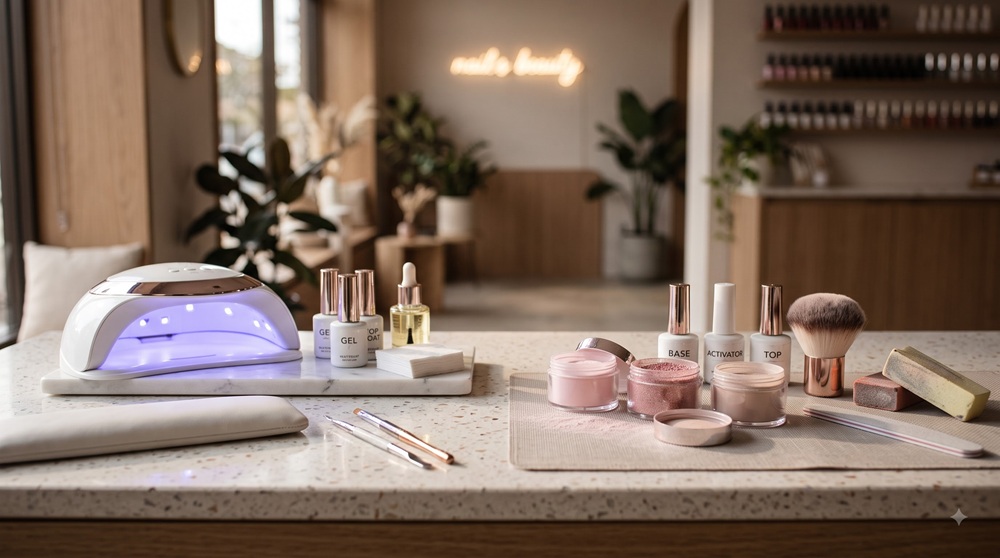
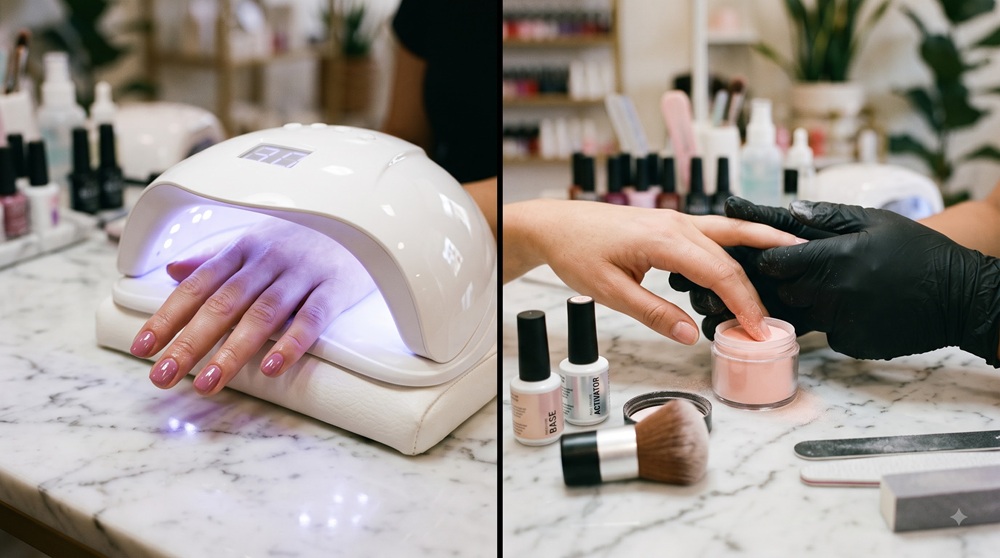
The experience in the salon chair varies significantly depending on which service you choose. For gel nails, the workflow is highly structured and relies heavily on technology. A technician starts with a base coat, followed by two or three layers of color, and finishes with a high-shine top coat. Each individual layer must be “cured” under a lamp for 30 to 60 seconds. This ensures the polish is completely dry before the next step begins.
The ‘Dip and Brush’ Workflow
Conversely, the dip powder process feels more like a craft project. The technician brushes on a base resin and literally dips your finger into a jar of colored powder. They repeat this process until the desired opacity and strength are achieved. After the layers are built, a liquid activator is brushed on to harden the stack. Finally, the technician files and buffs the surface to smooth out any lumps before applying a final sealant.
Time Commitment and Efficiency
When comparing salon chair time in 2026, gel manicures are generally faster. A professional can complete a gel set in about 45 minutes because the curing happens so quickly. Dip powder often requires 60 to 75 minutes due to the manual filing and buffing needed to perfect the shape. However, many clients find the extra time worth it for the added protection.
DIY Accessibility in 2026
Interestingly, dip powder has become the preferred choice for home users. Since it does not require an expensive, high-voltage UV or LED lamp, beginners find it much easier to start. You simply need the liquid set and the powder, making it a portable and cost-effective hobby. Many 2026 home kits now include precision brushes that make the resin application almost foolproof for non-professionals.
3. Dip vs Gel Which Is Better for Longevity and Durability?
When asking dip vs gel which is better, the answer usually depends on how hard you are on your hands. Gel polish is famous for its “soft” durability. It lasts about two weeks for most people before the edges start to wear or the shine begins to dull. Because it is flexible, it is excellent for people with naturally strong nails who just want a pop of color that won’t chip during a normal work week.
The 4-Week Durability Champion
However, dip powder is the undisputed champion of longevity. It is common for a dip manicure to last three to four weeks without a single chip. The material is so hard that it acts like a protective shell over the natural nail. For instance, if you work in a field involving manual labor, frequent hand washing, or heavy typing, dip powder will survive where gel might fail. It provides structural reinforcement that prevents the natural nail from breaking.
Lifestyle Factors and Performance
Consider your daily environment before choosing. If you spend a lot of time in water, such as swimming or doing dishes, gel can sometimes “peel” away from the nail plate as the natural nail expands and contracts. Dip powder is much more resistant to water infiltration. Specifically, the bond created by the cyanoacrylate resin is nearly waterproof, ensuring the color stays vibrant and attached for the full month.
Sustainability in 2026 Formulas
As we move through 2026, environmental impact has become a major talking point. Many brands are now creating “long-wear” formulas that require fewer touch-ups, reducing the overall chemical waste produced by the beauty industry. By choosing a manicure that lasts four weeks instead of two, you are effectively halving your consumption of nail products and removal solvents. This shift aligns with the global push for sustainable beauty practices.
4. Nail Health Comparison: Is Dip Powder Better for Your Nails?
A major concern for many is whether one method is “healthier” than the other. The primary debate surrounding gel involves UV exposure. While 2026 LED lamps are much safer than the old UV tube lamps, some dermatologists still express concern about cumulative skin aging on the hands. Therefore, many users now wear fingerless UV-protective gloves or apply high-SPF sunscreen before their gel appointments to mitigate these risks.
Mechanical Damage and Weight
While dip powder avoids the lamp, it carries its own set of health considerations. The sheer weight and rigidity of the acrylic can be taxing on very thin or brittle nails. If the dip is applied too thickly, it can cause the natural nail to feel “suffocated” or heavy. Moreover, if you accidentally bang your nail, the dip is so hard it won’t give, which can sometimes lead to the natural nail snapping underneath the coating.
Chemical Sensitivity and Allergies
In 2026, we have a better understanding of acrylate allergies. Some individuals develop contact dermatitis from the chemicals in gel polish. Dip powder resins use different chemicals, which can be a great alternative for those sensitive to traditional gel. However, the “dip flu”—a respiratory irritation caused by inhaling fine powder particles—is a known issue. Modern salons now use high-powered dust collectors to keep the air clean and safe for everyone.
The Myth of Nail Breathability
It is important to remember that nails do not actually “breathe.” They receive their nutrients and oxygen from the blood flow in the nail bed, not the air. Therefore, neither gel nor dip “suffocates” the nail in a biological sense. The damage people often see after removal is usually caused by improper technique rather than the product itself. Maintaining nail plate integrity requires careful application and, most importantly, professional removal.
5. The Removal Process: Which Is Harder to Take Off?
The most dangerous part of any manicure is the removal. If you peel off your polish, you are taking layers of your natural nail with it. Gel nails are generally easier to remove because the layers are thinner. A 10-minute soak in pure acetone is usually enough to dissolve the bond, allowing the gel to slide off with minimal scraping. In 2026, many salons use steam-removal machines that warm the acetone, speeding up the process significantly.
The Challenges of Removing Dip
Dip powder, due to its thickness and acrylic base, is much more stubborn. It typically takes 20 to 30 minutes of soaking to fully break down the polymer. Because it is so hard, technicians often use an e-file (electric file) to thin out the bulk of the product before soaking. This requires a high level of skill. If the technician is too aggressive with the e-file, they can easily thin the natural nail, leading to long-term damage.
2026 Best Practices for Home Removal
If you are removing your manicure at home, patience is your best friend. For dip powder, you should never try to pry the product off. Instead, use the “hot water bowl” method. Place a baggie of acetone and a cotton ball inside a bowl of warm water. The heat accelerates the chemical reaction, making the removal of dip powder much safer. Additionally, applying cuticle oil immediately after removal helps restore moisture to the nail plate.
Preventing Long-Term Thinning
To keep your nails healthy, experts recommend taking a “nail break” every few months. During this time, you can use strengthening treatments or keratin-based oils. According to the American Academy of Dermatology, giving your nails time to recover from the dehydration caused by acetone is crucial for maintaining long-term strength. This practice prevents the thinning and peeling often associated with back-to-back long-wear manicures.
6. Dip Powder vs Gel Polish Pros and Cons: A 2026 Cost-Benefit Analysis
When deciding on dip powder vs gel polish pros and cons, budget is a major factor. In major urban centers in 2026, a standard gel manicure costs between $45 and $65. Dip powder is generally more expensive, ranging from $55 to $85. This price difference reflects the longer application time and the cost of the specialized resins and powders used in the process.
The DIY Investment Strategy
If you choose to do your nails at home, the initial investment varies. A high-quality 2026 gel starter kit, including a professional-grade LED lamp, will cost around $100 to $150. A premium dip powder kit usually costs between $60 and $90. While the dip kit is cheaper upfront, you may find yourself buying more colors and replacement liquids over time. However, for many, the ability to skip the salon entirely leads to massive savings over a year.
Maintenance and Fill-ins
Another cost to consider is maintenance. Gel nails almost always require a full soak-off and a new set every two weeks. Some dip powder systems allow for “fills,” where the technician just adds powder to the regrowth area. This can save money and reduce the frequency of full acetone soaks. However, most professionals recommend a fresh set every other visit to ensure no bacteria or moisture is trapped under the old product.
Quick-Reference Comparison Guide
| Feature | Gel Nails | Dip Powder |
|---|---|---|
| Longevity | 2 Weeks | 3-4 Weeks |
| Curing Method | UV/LED Lamp | Air-dry Activator |
| Finish | Thin & Flexible | Thick & Hard |
| Removal Time | 10-15 Minutes | 20-30 Minutes |
| Avg Salon Cost | $45 – $65 | $55 – $85 |
Final Verdict for 2026
Ultimately, your choice depends on your priorities. If you value a natural look and change your color often, gel is your best bet. If you need a manicure that can survive a marathon or a month of gardening, dip powder is the clear winner. Both methods have evolved to be safer and more accessible than ever before. Contact Luxury Nails & Spa for the latest trendy nail designs.
While gel offers a flexible, natural look perfect for short-term wear, dip powder remains the champion of durability and longevity for those seeking a month-long manicure. The difference between gel and dip ultimately comes down to your nail health goals and lifestyle. Whether you prefer the high-tech glow of a curing lamp or the classic strength of acrylic resins, 2026 has provided the tools for everyone to have beautiful nails. Ready to upgrade your nail game? Check out our 2026 guide to the best HEMA-free dip kits for beginners!

